Generate alkalinity in situ
A bipolar membrane generates hydroxide inside the feed channel, bringing pH control directly into the electro-membrane process.
ElectroMCP changes the recovery architecture—not just one separation step. Using low-voltage electricity and bipolar membranes, it generates alkalinity inside the process, removes iron and aluminum impurities first, and then directly co-precipitates nickel, cobalt, and manganese while reducing reliance on alkaline chemicals.
ElectroMCP uses water and low-voltage electricity to generate hydroxide inside the feed channel, enabling selective impurity removal, composition-preserving NCM recovery, and acid recirculation within one process architecture.
A bipolar membrane generates hydroxide inside the feed channel, bringing pH control directly into the electro-membrane process.
After Fe/Al removal, nickel, cobalt, and manganese are co-precipitated in one operation—without separating three metals only to blend them back.
Membrane-controlled ion transport creates an acid-rich stream designed for concentration and reuse in upstream sulfuric-acid leaching.
Fe/Al removal
Confirmed under tested conditionsLower alkaline chemical use and high-salinity wastewater
System reduction targetProjected reduction in 10% NaOH use
Includes a projected 1,080 kWh/day reduction in treatment energy at a 600 m³/day reference facilityThe 60% reduction is a system target. Facility-scale figures are projections for a 600 m³/day reference case. Actual results depend on feed composition and operating conditions.
ElectroMCP turns pH control from an external dosing operation into an electrical input, enabling impurity removal and direct NCM co-precipitation in one feed pathway.
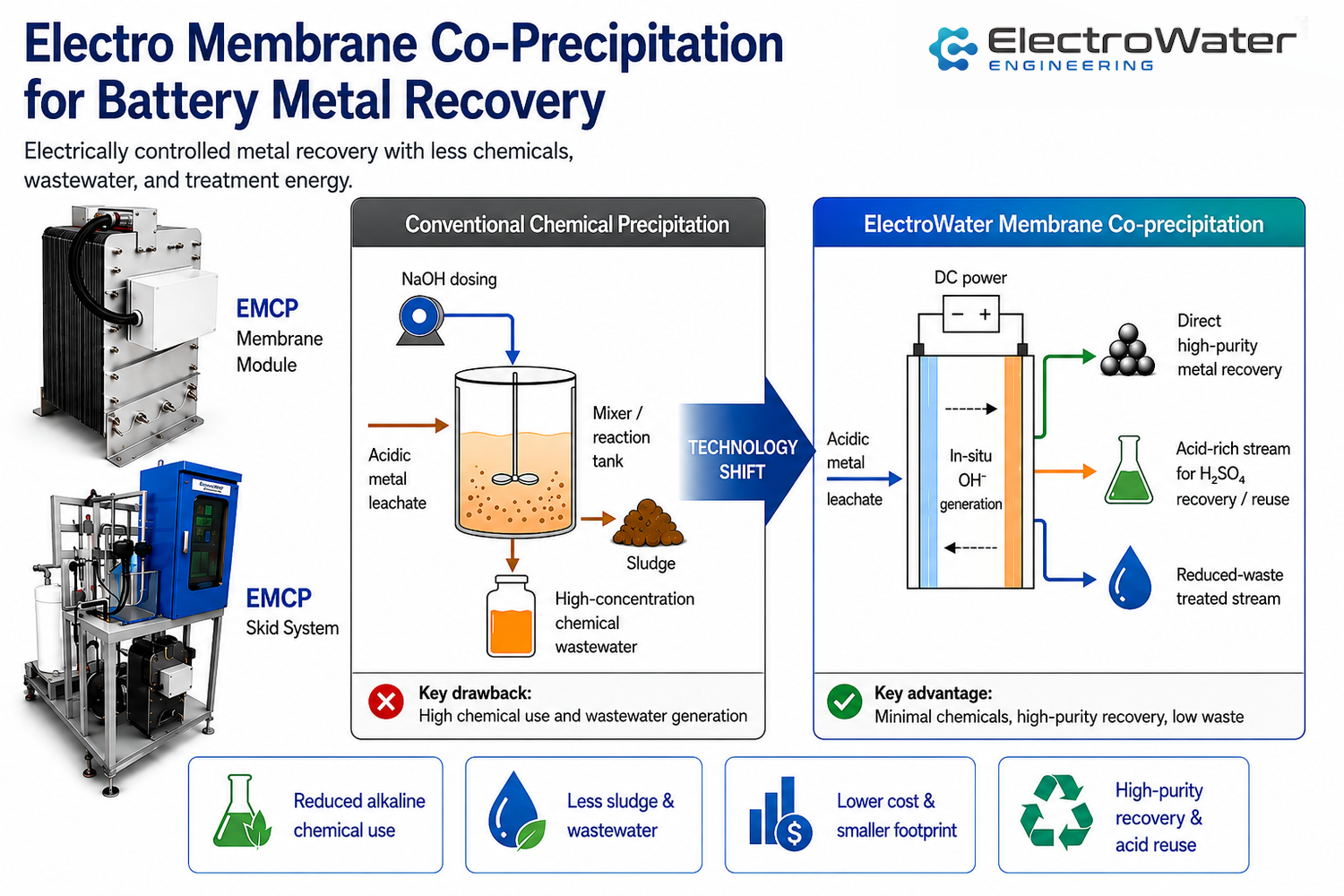
Low-voltage DC power drives bipolar membranes to generate OH⁻ from water directly inside the module.
Iron and aluminum are removed within a controlled pH window while nickel, cobalt, and manganese remain in solution.
Direct co-precipitation preserves the target NCM composition, reducing the need to separate and recombine individual metals.
The acid-rich stream created through membrane-controlled ion transport can be linked to concentration and reuse in upstream leaching.
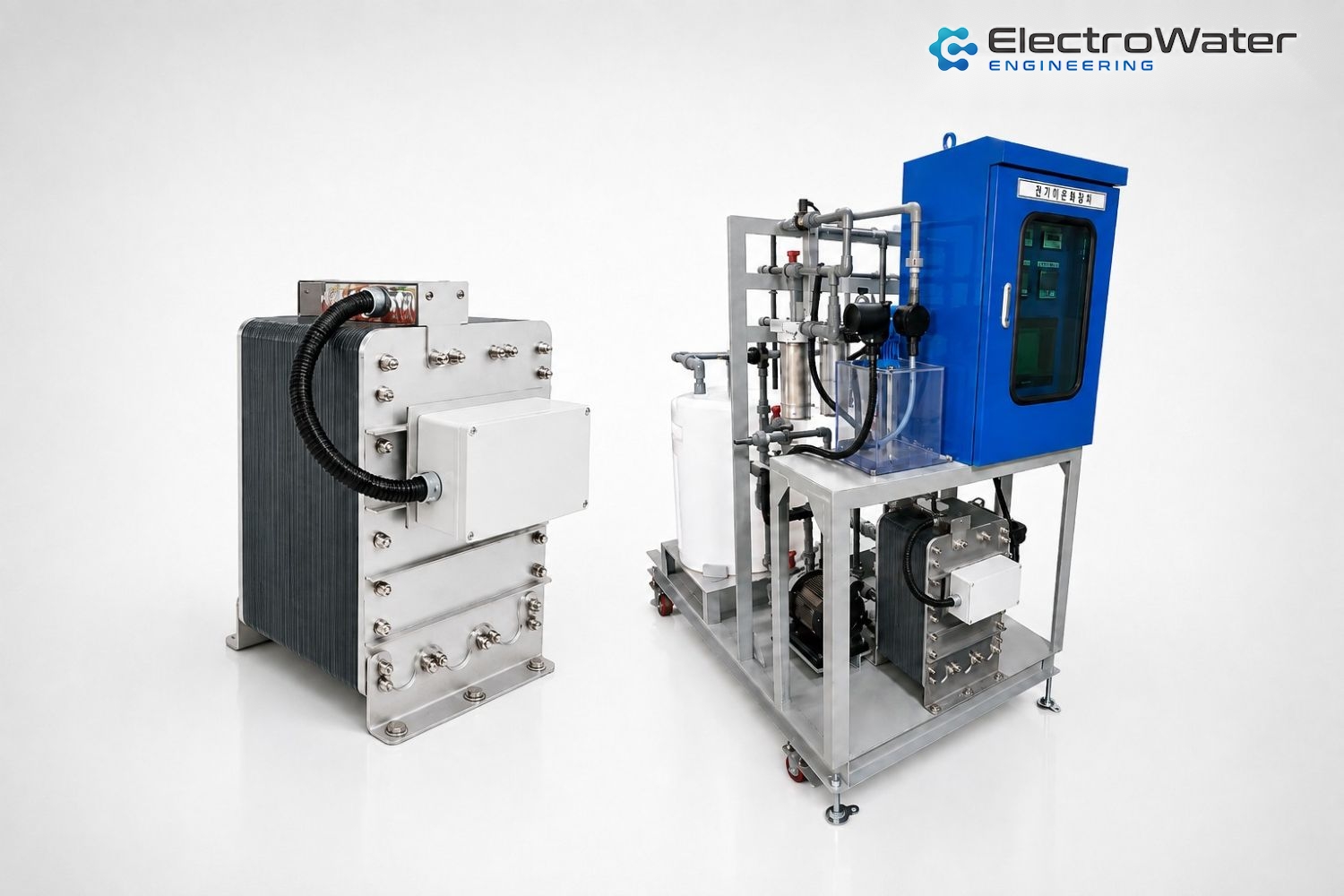
The core module combines with filtration, circulation, sensors, and centralized controls for flexible integration into retrofit or new recycling lines.
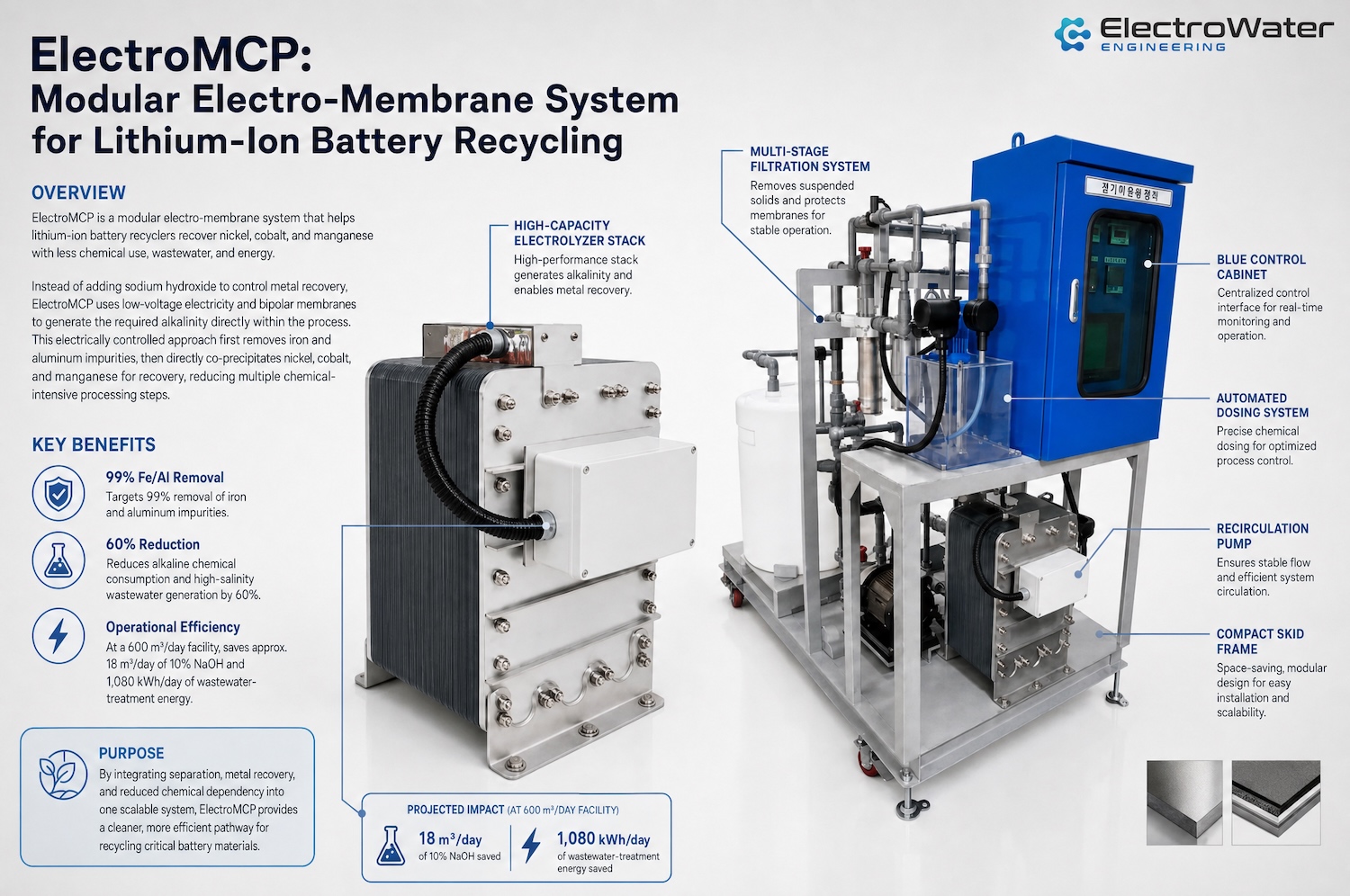
Repeating plate-and-frame channels allow capacity to scale without redesigning the recovery process.
Removes suspended solids and protects membranes for stable operation.
Brings pH, conductivity, current, voltage, flow, and circulation data into one control interface.
Connects the core module with tanks, pumps, filtration, and site-specific process interfaces.